🪐 What Are Exoplanets?
🌌 What It Is
Exoplanets are planets that exist outside our own Solar System. These fascinating worlds orbit stars other than our Sun, and they come in a wide variety of sizes, compositions, and configurations. Understanding exoplanets is a relatively new area of astronomy that has significantly expanded our knowledge of the universe.
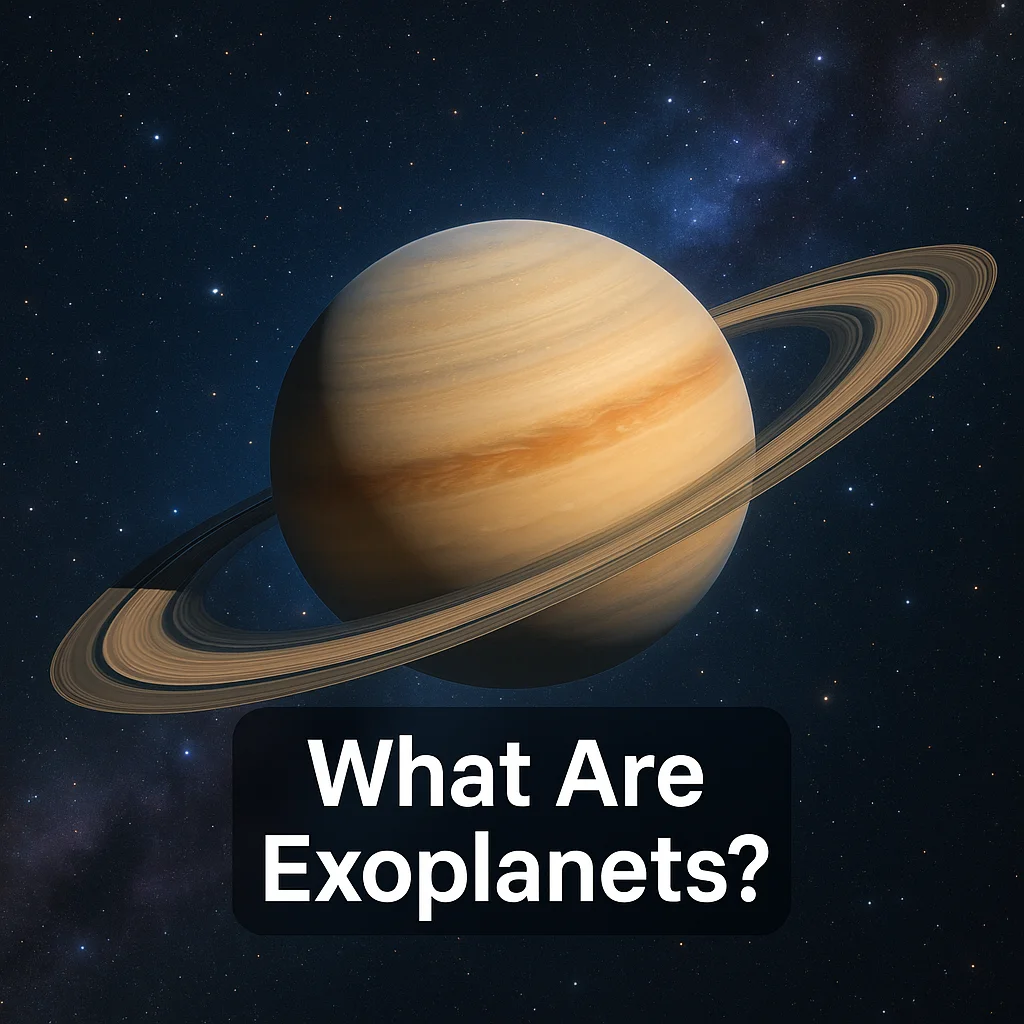
Planets, by definition, are celestial bodies that orbit a star and do not produce light of their own but reflect the light of their parent star. In terms of classification, exoplanets can be terrestrial, like Earth, or gas giants, akin to Jupiter. Some fall into the category of ice giants, similar to Uranus and Neptune in our Solar System.
This article will explore the intriguing features of exoplanets, covering key aspects like their location, size, atmosphere, and ways scientists have discovered them. Get ready to embark on a journey to distant worlds!
📍 Where It Is and How Far Away
Exoplanets are found throughout our Milky Way galaxy and potentially beyond, orbiting stars in a wide range of stellar environments. While our own Solar System is just one small part of the galaxy, exoplanets can be several light-years away from Earth. A light-year is the distance light travels in one year, about 5.88 trillion miles or 9.46 trillion kilometers.
The distance of exoplanets from their stars can greatly influence their temperature and potential habitability. Some exoplanets are located in the "habitable zone," where conditions might allow for liquid water to exist, a crucial factor for life as we know it.
Because exoplanets are so far away, they play a vital role in our understanding of planetary formation and evolution, pushing the boundaries of what we know about planets and their systems.
🧱 Size, Mass, and Gravity (Made Simple)
Exoplanets vary tremendously in size and mass, from small rocky worlds no bigger than Mercury to massive gas giants much larger than Jupiter. For beginners, imagine the size differences by comparing a tiny pebble to a giant beach ball; the range is vast and diverse.
The mass of an exoplanet affects its gravity, which in turn influences whether an object might feel heavy or light if you were to stand on it. For example, a high-gravity exoplanet would make a person feel much heavier compared to Earth, whereas a low-gravity exoplanet would cause a person to feel incredibly light, almost like bouncing on the moon.
Some exoplanets don't have a solid surface. In these cases, the concept of feeling gravity would be vastly different, as one would descend into layers of gas instead of standing on firm ground.
🌡️ Atmosphere and Weather
The atmospheres of exoplanets are as diverse as the planets themselves, ranging from thick, heavy blankets of gas to thin wisps of atmosphere. Common atmospheric elements include hydrogen, helium, and in some cases, harsher chemicals such as methane or ammonia.
Weather patterns on exoplanets can be extreme, with fierce winds, violent storms, and dramatic temperature shifts. For instance, some exoplanets have winds reaching thousands of miles per hour, while others might have permanent day and night sides, leading to stark temperature differences.
Such climatic features are shaped by the planet's proximity to its star, its rotation rate, and atmospheric chemistry, providing scientists with exciting clues about the potential for life and the processes shaping these alien worlds.
🪨 Surface and Interior
Rocky exoplanets may have surfaces dotted with craters, mountains, and perhaps even volcanoes, similar to those on Earth or Mars. These features are shaped by geological activity, meteor impacts, and in some cases, tectonic movements.
In contrast, gas or ice giants lack a solid surface. These planets consist of layers of gas and ice blended together, without a clear boundary demarcating where the atmosphere ends and the interior begins.
The interiors of exoplanets can be equally captivating, with dense cores, mantle layers, and, in many cases, high-pressure regions and unique chemical compositions that speak to the complex history of these worlds.
🌀 Rotation, Orbit, and Seasons
Exoplanets can have diverse rotation periods, with some rotating quickly in a matter of hours, while others take days or even longer to complete a spin. This rotation influences the length of a "day" on the planet.
The orbit of an exoplanet around its star governs the length of its year. Some exoplanets have very tight orbits, completing a year in only a few days, whereas others take much longer, similar to Earth or beyond.
Seasons on exoplanets depend on the planet's axial tilt relative to its orbit. A significant tilt can lead to pronounced seasonal changes, while a minor tilt may result in a more uniform climate year-round.
🧲 Magnetic Field and Radiation
Many exoplanets possess magnetic fields, generated by their interiors, which play a crucial role in protecting the planet from harmful stellar radiation. A strong magnetic field can shield a planet's atmosphere, ensuring its stability over long periods.
For exoplanets with magnetic fields, auroras could theoretically occur, creating dazzling displays of light much like the northern and southern lights on Earth.
Understanding magnetic fields helps scientists assess a planet's potential habitability and the challenges of launching space missions or designing instruments to study these distant worlds.
🌙 Moons, Rings, and Neighbors
Some exoplanets might have an entourage of moons, similar to Jupiter or Saturn in our Solar System. These moons could significantly influence the planet through gravitational interactions that affect tides and potentially lead to geological activity.
While exoplanetary rings are yet to be definitively observed, they are plausible given the dynamics seen within our own planetary system. Such rings would add aesthetic and scientific interest, potentially affecting the planet's atmosphere and appearance.
Exoplanets exist in diverse stellar neighborhoods, ranging from solitary stars to bustling multi-star systems, each offering unique insights into their formation and evolution.
🔭 How We Know (Missions and Observations)
Astronomers discover and study exoplanets using two main tools: telescopes and spacecraft. Telescopes on Earth and in space have identified thousands of exoplanets using various methods, such as observing the slight dimming of a star as a planet passes in front or detecting the wobble of a star caused by gravitational pulls.
Space missions like the Kepler Space Telescope and the Transiting Exoplanet Survey Satellite (TESS) have revolutionized exoplanet discoveries, enhancing our understanding through precise measurements of star brightness and spectral analysis.
The data collected include images, spectral lines, and gravity measurements, all contributing to a detailed picture of exoplanets and the places they inhabit.
❓ Common Questions and Misconceptions
Is an exoplanet a star? No, exoplanets do not generate their own light; they reflect the light of their parent star.
Can you stand on an exoplanet? It depends. If it's a rocky exoplanet, you might imagine standing as similar to being on Earth, but many exoplanets, especially gas giants, lack a solid surface.
Is every exoplanet habitable? Not at all. While some might fall into the habitable zone, many exoplanets have harsh conditions that do not support life as we know it.
Why do exoplanets have different colors? The color of an exoplanet is influenced by its atmosphere, surface materials, and the light from its star, causing varied hues.
Are there exoplanets in our Solar System? No, exoplanets are specifically planets outside our Solar System.
Can we see exoplanets with the naked eye? Currently, exoplanets are too far away and small to be seen without the aid of telescopes.
Are there exoplanets without stars? Some exoplanets, known as rogue planets, may drift in space without orbiting a star, making their detection a challenging task.
📌 Summary
- Exoplanets are planets orbiting stars outside our Solar System.
- They exist throughout the Milky Way galaxy, often many light-years from Earth.
- Exoplanets come in a range of sizes from small rocky bodies to massive gas giants.
- Their atmospheres vary, with weather patterns shaped by proximity to their star and atmospheric composition.
- Rocky exoplanets have surfaces similar to Earth, while gas giants have layered atmospheres.
- Exoplanets have diverse rotation periods and orbits, affecting day length and seasons.
- Magnetic fields can protect atmospheres from radiation and might produce auroras.
- Some may have moons or ring systems, affecting planetary dynamics.
- Discoveries are made using telescopes and space missions, gathering light and spectral data.
- Exoplanets expand our understanding of planet formation, evolution, and the potential for life elsewhere.