🪐 What Is the Habitable Zone?
🌌 What It Is
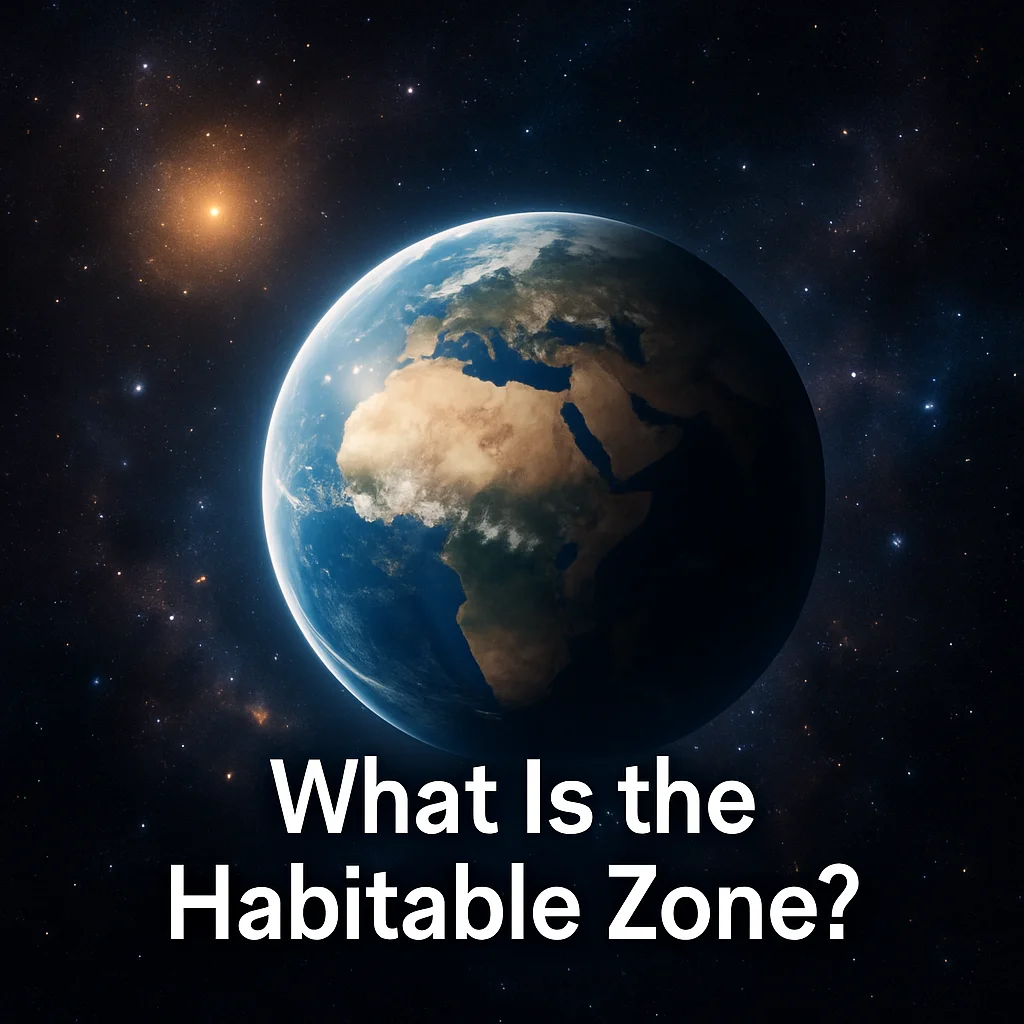
The Habitable Zone is a region around a star where conditions might be right for liquid water to exist on a planet's surface. It’s often called the "Goldilocks Zone" because, like the porridge in the fairy tale, it’s neither too hot nor too cold but just right for sustaining water in its liquid form.
Understanding what makes a planet potentially habitable involves studying the distance from its star, the composition of its atmosphere, and other environmental factors. Planets within this zone are more likely to have conditions suitable for life as we know it.
In this article, you’ll learn about the factors that define the Habitable Zone, its significance in the search for extraterrestrial life, and the properties of planets that lie within it. We will also discuss the various characteristics that make a planet suitable for habitation.
📍 Where It Is and How Far Away
The location of the Habitable Zone varies depending on the size and temperature of the star it surrounds. For a star like our Sun, the Habitable Zone is roughly between 0.95 and 1.37 astronomical units (AU) from the star. One AU is the average distance from Earth to the Sun, about 93 million miles or 150 million kilometers.
Stars that are cooler and smaller than the Sun, such as red dwarfs, have Habitable Zones much closer to them. On the other hand, larger and hotter stars have zones that are much further away. This affects not only the potential for life but also the types of planets that might exist in these zones.
The amount of sunlight a planet receives and its surface temperature are directly related to its position within the Habitable Zone. Planets too close to their star may experience extreme heat, while those too far away might be too cold to support liquid water.
🧱 Size, Mass, and Gravity (Made Simple)
Planets in the Habitable Zone can vary greatly in size and mass, from small rocky worlds like Earth to larger gas giants. The size and mass of a planet influence its gravitational pull, which determines whether it can hold onto an atmosphere. A planet with too little gravity might lose its atmosphere, while a massive planet might have a very thick atmosphere.
Gravity also affects how heavy or light things feel on the surface. For instance, if you weigh 100 pounds on Earth, you would weigh only 38 pounds on Mars due to its weaker gravity. In contrast, on a larger planet with stronger gravity, you would feel heavier than on Earth.
Understanding gravity is crucial because it affects everything from a planet's atmosphere to the potential for life. Gravity helps maintain an atmosphere, which in turn can regulate temperature and protect the surface from harmful space radiation.
🌡️ Atmosphere and Weather
The atmosphere of a planet or moon in the Habitable Zone plays a significant role in determining its climate and potential habitability. An atmosphere provides a medium for weather patterns such as winds and clouds and helps to maintain surface temperatures by trapping heat.
On Earth, our atmosphere is composed primarily of nitrogen and oxygen. In other planets’ atmospheres, different gases might dominate, creating unique weather patterns. For example, Venus has a thick atmosphere rich in carbon dioxide, leading to intense greenhouse effects and surface temperatures hotter than Mercury’s.
The weather on a planet within the Habitable Zone can vary depending on its rotation, axial tilt, and distance from the star. These factors contribute to the type of weather experienced, such as storms, seasons, and temperature changes.
🪨 Surface and Interior
The surface of a planet within the Habitable Zone can be rocky, icy, or covered in oceans. For rocky planets like Earth, surface features include mountains, valleys, craters, and volcanoes. These features are shaped by processes like tectonic activity, erosion, and impacts from space rocks.
Large gas giants, which might also occupy habitable zones, lack a solid surface but have deep atmospheres and perhaps a solid core beneath layers of gas and liquid. These planets are often surrounded by complex ring systems and have many moons.
The interior of a planet affects its magnetic field and geological activity. A planet with a molten core may generate a magnetic field, which can shield its atmosphere from solar winds and cosmic rays, providing additional protection for potential life.
🌀 Rotation, Orbit, and Seasons
The rotation period of a planet, or how long it takes to complete one spin on its axis, determines the length of its day. Most planets in the Habitable Zone rotate within a few hours to over a day.
The orbit of a planet, or its path around the star, determines its year length. Earth takes 365 days to orbit the Sun, creating our year. Planets with more stretched orbits might experience more extreme seasonal temperatures.
The axial tilt of a planet affects its seasons. Earth has a tilt of about 23.5 degrees, leading to seasonal changes. A planet with a different tilt could have very different seasons, or possibly none at all, impacting its climatic conditions.
🧲 Magnetic Field and Radiation
A magnetic field is generated by movements in a planet's core and acts like a shield protecting it from solar wind and cosmic radiation. This field can influence the planet's atmosphere and potential for life by deflecting harmful particles.
Earth’s magnetic field creates auroras, or northern and southern lights, near the poles where solar wind particles collide with atmospheric gases. Without a magnetic field, a planet might lose its atmosphere over time to solar and cosmic winds.
The presence of a magnetic field is important for spacecraft safety as well. It reduces the exposure of astronauts and equipment to dangerous space radiation, ensuring safer exploration and study of such planets.
🌙 Moons, Rings, and Neighbors
Many planets within the Habitable Zone have moons, which can significantly influence the planet's environment. Moons can affect tides and potentially stabilize a planet's axial tilt, leading to more stable climates over long periods.
Saturn's rings, made of ice and rock, accentuate its beauty, while Jupiter's many moons, including volcanic Io and icy Europa, offer intriguing possibilities for life due to subsurface oceans.
If a planet lacks moons, it might experience fewer tidal influences. However, every celestial body within or around a habitable zone offers unique insights into the dynamics and history of planetary systems.
🔭 How We Know (Missions and Observations)
Telescope observations and space missions help us understand planets in the Habitable Zone. Telescopes provide distant views of these zones, capturing light spectra and images that reveal atmospheric compositions and surface conditions.
Spacecraft missions give closer examinations. Notable missions like the Kepler Space Telescope have helped identify thousands of exoplanets, some of which lie in the Habitable Zones of their stars. Data from these missions provide key insights into the possibilities of life-bearing conditions in space.
Through these methods, scientists can measure the gravitational pull, magnetic fields, and other properties that offer clues about a planet’s habitability, furthering our understanding of the universe.
❓ Common Questions and Misconceptions
Is it a star? No, the Habitable Zone refers to a region around a star, not the star itself.
Can you stand on it? Only if there’s a solid planet within the Habitable Zone. Gas giants in the zone would not have a solid surface.
Is it habitable? Not necessarily. While conditions might allow for liquid water, factors like atmosphere and planetary surface conditions also determine habitability.
Why is it called "Goldilocks Zone"? Because it's "just right" for liquid water, akin to the porridge in the child’s story.
Is Earth in the Habitable Zone? Yes, Earth is within the Sun’s Habitable Zone, allowing for our planet’s stable liquid water and life.
Is it always the same distance from the star? No, the boundaries of the Habitable Zone can vary based on the star's temperature and size.
Why is water so important? Water is a crucial ingredient for life as we know it, serving as a solvent and medium for biological processes.
📌 Summary
- The Habitable Zone is the region where liquid water can exist.
- Its location varies with the star’s characteristics.
- Planet size and gravity affect surface conditions and atmosphere.
- Atmosphere and weather patterns are essential for habitability.
- Surface types vary: rocky, icy, or gaseous.
- Rotation and orbit affect day length and seasons.
- A magnetic field protects against harmful radiation.
- Moons can influence climate stability.
- Telescope and spacecraft missions provide data on habitability.
- Liquid water potential makes the Habitable Zone noteworthy.