🪐 Best Time to See Jupiter (General Tips)
🌌 What It Is
Jupiter is a gas giant, the largest planet in our Solar System. It belongs to the category of outer planets, alongside Saturn, Uranus, and Neptune. Unlike terrestrial planets like Earth and Mars, gas giants are composed mostly of hydrogen and helium, and they do not have a solid surface to stand on.
In this article, you'll learn about the best times to see Jupiter, where it is located, and some interesting facts about its fascinating characteristics. By understanding these aspects, you'll be better prepared to appreciate the stunning views Jupiter can offer through a telescope.
Whether you're a beginner stargazer or an aspiring astronomer, this guide will provide essential information on observing this magnificent planet, making your stargazing experience more enriching.
📍 Where It Is and How Far Away
Jupiter is the fifth planet from the Sun, situated between Mars and Saturn. It lies approximately 484 million miles away from Earth, which is about 5.2 Astronomical Units (AU). One AU is the average distance from the Earth to the Sun, so this gives you a sense of how far away Jupiter is placed in our cosmic neighborhood.
Due to its substantial distance from the Sun, Jupiter receives less sunlight, resulting in a generally cooler environment. However, its massive size helps retain some heat, preventing temperatures from plummeting to extremes.
The position of Jupiter in its orbit also influences how and when we can observe it from Earth. The planet takes about 12 Earth years to complete one orbit around the Sun, affecting the periods when it comes closest to our planet.
🧱 Size, Mass, and Gravity (Made Simple)
Jupiter is a giant among planets, with a diameter of about 86,881 miles. To put it in perspective, more than 1,300 Earths could fit inside Jupiter if it were a hollow sphere. Its immense mass is approximately 318 times that of Earth, making it incredibly dense.
While Jupiter's surface gravity is stronger than Earth's, about 2.4 times greater, you wouldn't experience it the way we do here. With no solid ground to stand on, a hypothetical traveler would instead be swept into its thick atmosphere.
For those interested in gravity, this means any object "falling" into Jupiter would be accelerated significantly more than on Earth, providing a captivating example of gravitational forces at work.
🌡️ Atmosphere and Weather
Jupiter's atmosphere is composed mainly of hydrogen and helium, the same elements that make up the Sun. It also contains traces of other compounds such as methane, ammonia, and water vapor, giving rise to a range of atmospheric phenomena.
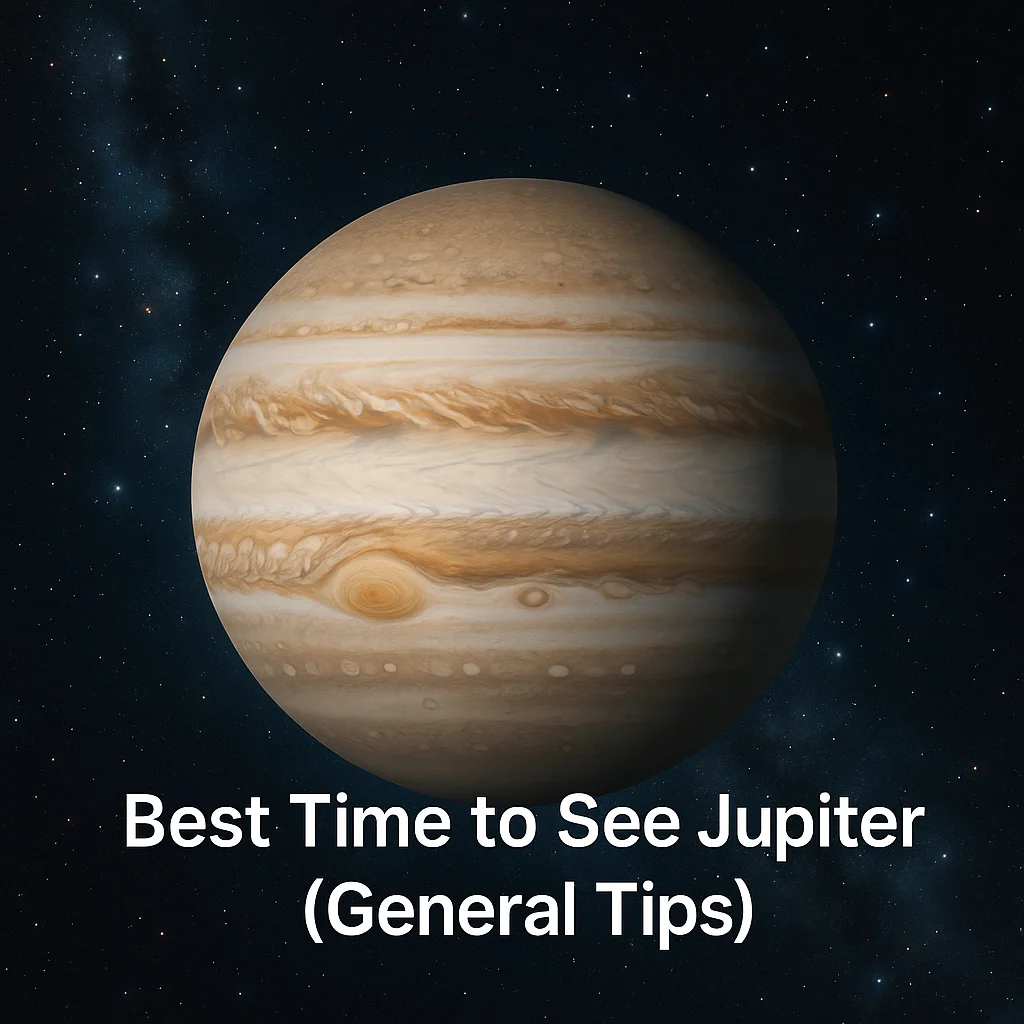
The swirling clouds and vivid colors that define Jupiter's appearance are a result of its dynamic weather. High-speed winds, reaching up to 400 miles per hour, create bands and zones, leading to the characteristic stripes seen on the full disk of the planet.
One of the most famous features in Jupiter's weather system is the Great Red Spot, a gigantic storm larger than Earth that has been raging for at least 400 years. These weather patterns result from the planet's rapid rotation and chemical interactions within its atmosphere.
🪨 Surface and Interior
Unlike terrestrial planets, Jupiter lacks a solid surface. Instead, it transitions gradually from its gaseous atmosphere into a dense interior. As one ventures deeper, pressures and temperatures increase, compressing hydrogen into a metallic form.
This transition defines the "layers" of Jupiter, with its core believed to be made of heavy elements. However, the exact structure remains a topic of research and exploration.
Understanding that there is no distinct boundary to stand on is crucial when contemplating the concept of "surface" within the context of gas giants like Jupiter.
🌀 Rotation, Orbit, and Seasons
Jupiter has an incredibly fast rotation period, taking just under 10 hours to complete one rotation. This rapid spin contributes to its oblate shape, causing it to bulge at the equator.
The planet's long orbital period of 12 Earth years means it moves slowly across our night sky. Its relatively small axial tilt of 3.13 degrees means Jupiter doesn't experience seasons like Earth does.
These characteristics are pivotal in determining the best times to view Jupiter from Earth, as they affect its visibility and position in the sky.
🧲 Magnetic Field and Radiation
Jupiter boasts the strongest magnetic field of any planet in the Solar System, generated by the movement of metallic hydrogen within its interior. This magnetic field creates stunning auroras, similar to those on Earth but much more intense.
However, Jupiter's strong magnetic environment also harbors intense radiation belts. These belts pose significant challenges for spacecraft, necessitating careful engineering to prevent damage when missions explore the planet.
This aspect of Jupiter's nature highlights the impressive and sometimes hazardous conditions encountered by space missions to the giant planet.
🌙 Moons, Rings, and Neighbors
Jupiter has a collection of 79 known moons. The most famous of these are the Galilean moons: Io, Europa, Ganymede, and Callisto. These were discovered by Galileo Galilei in 1610 and remain of significant scientific interest.
The planet also possesses a faint ring system, composed primarily of dust particles. While not as prominent as Saturn's rings, these structures add to Jupiter's mystique.
Jupiter's gravitational influence extends far, affecting nearby objects and even shaping the orbits of asteroids in the region known as the Trojan asteroids.
🔭 How We Know (Missions and Observations)
Our understanding of Jupiter has been vastly enriched by both telescopic observations and spacecraft missions. Ground-based telescopes provide valuable insights into the planet's atmospheric dynamics and movements.
Space missions like NASA's Voyager, Galileo, and the recent Juno mission have provided unprecedented data. These missions capture images, measure gravitational and magnetic fields, and analyze atmospheric composition.
Such efforts enhance our comprehension of this gas giant, offering a window into the complexity and beauty of the largest planet in our Solar System.
❓ Common Questions and Misconceptions
Here's a friendly guide to clear up some common misconceptions about Jupiter:
- Is Jupiter a star? No, it lacks the mass to trigger nuclear fusion.
- Can you stand on Jupiter? There's no solid surface to stand on due to its gaseous nature.
- Is Jupiter habitable? The harsh conditions make it uninhabitable for life as we know it.
- Why is Jupiter colored that way? Its colors result from chemical reactions in its atmosphere.
- Does Jupiter have seasons? Its minimal axial tilt means it has very mild, if any, seasonal changes.
- Could Jupiter become a star? It's not gaining sufficient mass necessary for such a transformation.
- Is the Great Red Spot shrinking? Yes, observations suggest it has been decreasing in size over time.
- Are Jupiter's rings visible from Earth? They are too faint to see without the aid of a spacecraft.
- Does Jupiter protect Earth from asteroids? Its gravity can both deflect and direct asteroids towards and away from Earth.
📌 Summary
- Jupiter is the largest gas giant in our Solar System.
- It resides 5th from the Sun, about 5.2 AU from Earth.
- Massive but unsolidified surface means no standing opportunity.
- Dynamic atmosphere with fast winds and the Great Red Spot storm.
- No solid surface; interior has dense pressures and temperatures.
- Fastest rotating planet with a 12-year orbit.
- Very strong magnetic field causing intense auroras and radiation belts.
- 79 moons and a faint ring system emphasize its gravitational influence.
- Understanding enhanced by ground telescopes and missions like Juno.
- A memorable fact: More than 1,300 Earths could fit inside Jupiter.