🪐 Best Apps for Identifying Planets and Stars
🌌 What It Is
Stargazing has always sparked human curiosity, and with the convenience of modern technology, you can now identify planets and stars using your smartphone. These apps use augmented reality and GPS data to provide real-time information about celestial objects visible from your location.
The main goal for using these apps is to make the night sky more accessible to everyone, from beginners to seasoned astronomers. By simply pointing your device at the sky, these apps can help you identify planets, stars, constellations, and even satellites.
In this article, we'll explore the best apps currently available that can assist you in identifying celestial bodies. These apps can greatly enhance your stargazing experience, making it both educational and enjoyable.
📍 Where It Is and How Far Away
The universe is vast, and the celestial objects we see in the night sky are located at incredibly varied distances. Planets like Venus and Mars are relatively close, residing within our Solar System, while stars are much farther away, located light-years from Earth.
For instance, the average distance to Mars is about 225 million kilometers (around 140 million miles) from Earth. In terms of light travel, it's about 12.5 light-minutes away. On the other hand, the nearest star system, Alpha Centauri, is over four light-years away, meaning the light we see left the star four years ago.
Understanding these distances helps in grasping why planets appear to move across the sky in different ways compared to the distant stars, forming a backdrop against which planets can be seen to "wander."
🧱 Size, Mass, and Gravity (Made Simple)
Planets and stars vary greatly in size and mass, influencing their gravitational pull. For example, Jupiter is the largest planet in our Solar System, with a mass over 300 times that of Earth and a strong gravitational pull. This means objects on Jupiter would feel much heavier than they do on Earth.
Stars, vastly more massive than planets, have even greater gravitational forces. A star’s gravity is so strong that it causes nuclear fusion in its core, producing the light and heat we associate with stars.
Despite their size, gas giants like Jupiter and Saturn lack a solid surface, which means if you could somehow stand on them, it wouldn't feel like standing on Earth or Mars. Instead, you'd sink into their dense atmospheres.
🌡️ Atmosphere and Weather
The atmosphere of a celestial body determines its weather and climate. Terrestrial planets like Earth and Mars have atmospheres of varying thickness, composed of gases like nitrogen and carbon dioxide. Mars has a thin atmosphere, resulting in drastic temperature changes.
Gas giants like Jupiter are primarily composed of hydrogen and helium, with weather systems vastly different from terrestrial planets. They exhibit enormous storms, like the Great Red Spot on Jupiter, a storm larger than Earth that has raged for centuries.
The temperature of these bodies also varies dramatically based on their distance from the Sun. Closer planets like Mercury experience extreme heat, while outer planets are much colder, with temperatures dropping to frigid levels.
🪨 Surface and Interior
Rocky planets, such as Earth and Mars, have solid surfaces featuring mountains, valleys, and craters from meteor impacts. The geology of these planets provides clues about their history and the forces that shaped them.
Gas and ice giants have no solid surface. Instead, they have layers of gas that get denser with depth, eventually transitioning into liquids or slushy substances. The core, though made of heavier materials, is surrounded by thick layers of gaseous elements.
The interior structures of these bodies are fascinating to scientists who study their composition and dynamics to gain insights into how our Solar System formed and evolved.
🌀 Rotation, Orbit, and Seasons
The rotation and orbit of a celestial body affect its day length and year length. On Earth, a day is 24 hours due to its rotation, while a year is 365 days based on its orbit around the Sun.
Some planets have unusual rotation periods; for example, a day on Venus is longer than its year because it rotates very slowly on its axis. This causes unique seasonal patterns and temperature variations.
Planets with a significant axial tilt experience seasons, much like Earth. This tilt causes varying sunlight distribution over the year, leading to changes in climate and weather across different regions of the planet.
🧲 Magnetic Field and Radiation
Magnetic fields are crucial in protecting planets from solar and cosmic radiation. Earth’s magnetic field deflects harmful charged particles, which is vital for sustaining life.
Jupiter’s strong magnetic field is the result of its rapid rotation and metallic hydrogen core, creating intense radiation belts around the planet that can affect spacecraft.
The interaction of solar wind with Earth’s magnetic field gives rise to auroras—beautiful natural light displays visible in high-latitude regions near the poles.
🌙 Moons, Rings, and Neighbors
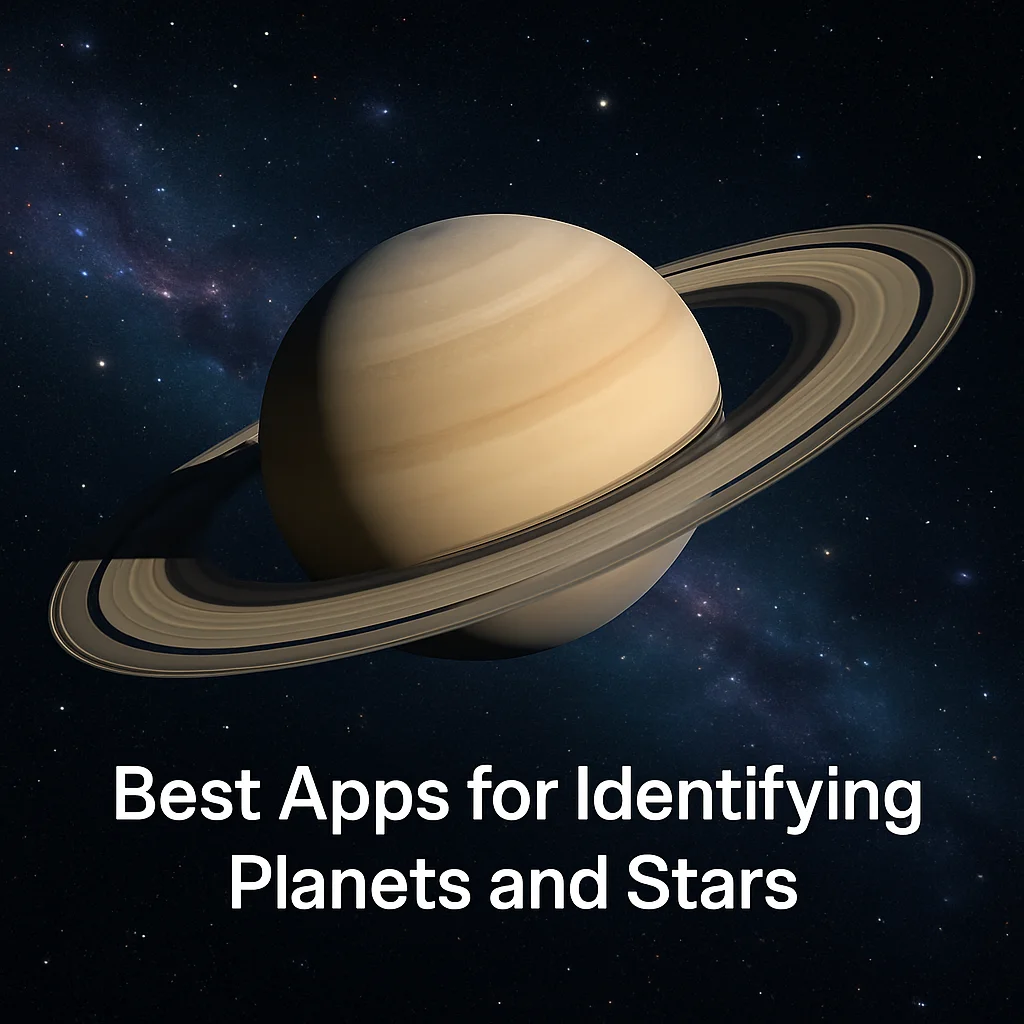
The planets’ moons and rings offer diverse landscapes and phenomena to study. For instance, Saturn is renowned for its intricate ring system, composed of countless ice particles that reflect sunlight, making them visible even from Earth.
Many planets have moons; Jupiter alone has over 75. These moons vary widely—from the volcanic activity on Io to the icy surface of Europa, which is of interest due to potential subsurface oceans.
Gravitational interactions between planets, their moons, and nearby celestial objects can lead to phenomena such as tidal forces, which affect planetary orbits and rotations, sometimes even fostering conditions conducive to life.
🔭 How We Know (Missions and Observations)
Much of our understanding of planets and stars comes from both ground-based telescopes and space missions. Telescopes allow astronomers to study light and spectra, revealing the chemical composition and motion of celestial objects.
Space missions provide up-close explorations; for example, the Voyager and Pioneer missions journeyed to the outer planets, sending back images and data that transformed our knowledge of the Solar System. The Hubble Space Telescope has captured stunning images of distant galaxies, nebulae, and more.
Data collected from different sources helps scientists create maps, study atmospheres, and understand gravitational fields, all contributing to a comprehensive picture of these celestial wonders.
❓ Common Questions and Misconceptions
Is it a star? Many beginners often mistake bright planets for stars. Planets shine by reflecting sunlight, whereas stars emit their own light through nuclear fusion.
Can you stand on it? On rocky planets, yes, but gas giants lack solid surfaces. Standing on Jupiter isn’t possible as you would sink into its dense, gaseous atmosphere.
Is it habitable? Earth remains the only known habitable planet with conditions suitable for life. However, moons like Europa intrigue scientists with possible subsurface oceans.
Why is it that color? Planets appear different colors due to the reflection and absorption of sunlight by their atmospheres and surfaces. For example, Mars appears red due to iron oxide (rust) on its surface.
Is there weather? Absolutely. Weather conditions vary from dusty winds on Mars to massive storms on Jupiter, shaped by atmospheric composition and solar energy.
Are planets aligned? Planetary alignments occur when planets line up in the sky from our perspective, though they remain far apart in space. Such alignments can lead to interesting astronomical events.
📌 Summary
- Celestial identification apps enhance stargazing by utilizing AR and GPS.
- Planets are located within our Solar System; stars are light-years away.
- Size and mass influence gravity, with unique sensation on gas giants.
- Atmospheres vary widely, from thin on Mars to thick on Jupiter.
- Rocky surfaces vs gas/ice layers: Different planetary compositions.
- Rotation and orbit affect day length and seasonal changes.
- Magnetic fields protect from harmful radiation and create auroras.
- Moons and rings offer diverse features and gravitational interactions.
- Space missions and telescopes provide critical data and images.
- Understanding planets involves weighing multiple scientific insights.