🔭 Binocular Stargazing Tips for Beginners
🌌 What It Is
Binocular stargazing is an accessible and affordable way to explore the night sky. Unlike telescopes, binoculars are lightweight, easy to use, and portable. They provide a wider field of view, making them perfect for beginners who want to start their journey into astronomy.
With binoculars, you can observe many celestial objects such as the Moon, planets, star clusters, and even some galaxies. This guide will introduce you to the basics of using binoculars for stargazing, helping you identify what you can see and offering tips for getting the best experience under the stars.
By the end of this article, you'll have a better understanding of what stargazing with binoculars entails and how to make the most of your observations. Whether you are in your backyard or visiting a dark sky site, these tips will enrich your astronomical adventures.
📍 Getting Started with Binocular Stargazing
The first step in binocular stargazing is selecting the right pair of binoculars. Most beginners start with binoculars that have a magnification of 7x to 10x. These numbers indicate how much closer objects will appear compared to the naked eye.
Besides magnification, the aperture size of the binoculars, which ranges from 35mm to 50mm for beginners, is crucial. A larger aperture gathers more light, allowing you to see fainter objects in the sky. However, larger binoculars can be heavier and harder to steady, so a compromise is often necessary.
Once you have your binoculars, the next consideration is finding a good viewing location. Ideally, choose a place away from city lights to minimize light pollution. A dark sky site will reveal more stars and celestial features that aren't visible from urban areas.
🧱 Learning the Night Sky
Understanding the layout of the night sky is essential for finding celestial objects with binoculars. Start by familiarizing yourself with the major constellations. These star patterns can serve as guides to finding planets, star clusters, and galaxies.
Use a star chart or a mobile app to help you identify constellations and track their positions throughout the year. As the Earth's position changes, the visible constellations will vary with the seasons, offering different celestial sights at different times.
Pay attention to well-known asterisms, like the Big Dipper or Orion's Belt, which can help you navigate the sky. These patterns are easy to find and can lead you to other interesting objects nearby.
🌡️ Observing the Moon and Planets
The Moon is one of the most rewarding objects to observe with binoculars. Its phases and cratered surface can be seen in lovely detail. During a full moon, its brightness can be overwhelming, but it's perfect for observing near the crescent phase when shadows define the Moon's surface features.
Planets such as Venus, Jupiter, and Saturn are also fascinating. Venus appears as a bright star and goes through phases like the Moon, while Jupiter's four largest moons can be seen as tiny points of light dancing around the planet.
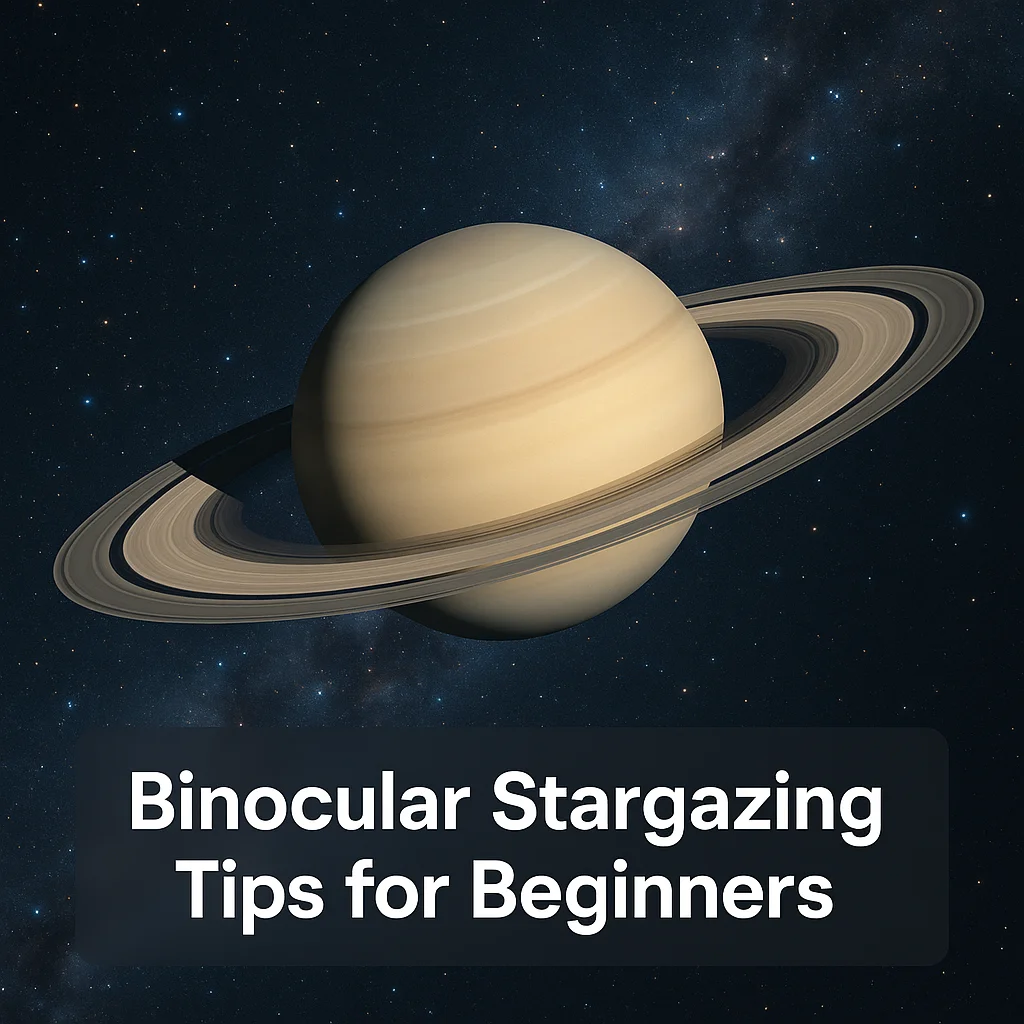
Saturn's rings may even become visible with larger binoculars, though they appear as a subtle bulge rather than the distinct rings seen through a telescope. Knowing when and where to spot these planets enhances your stargazing experience.
🪨 Exploring Star Clusters and Galaxies
Binoculars enable you to explore beyond the solar system, revealing star clusters such as the Pleiades and the Beehive Cluster. These groups of stars are beautiful clouds of light, providing a sense of the vastness of our galaxy.
Some galaxies, like the Andromeda Galaxy, are visible with binoculars from a dark location. As a faint, fuzzy patch in the sky, seeing another galaxy with binoculars gives you a glimpse into the universe far beyond our Milky Way.
Tracking down these distant objects requires patience and careful observation. Star charts or apps can be valuable tools for locating and identifying these fascinating targets.
🌀 Tips for a Successful Stargazing Session
To get the most out of your stargazing session, prepare appropriately. Dress warmly if you're observing on a cool night, and bring blankets or chairs to make the experience comfortable over extended periods.
Allow your eyes to adjust to the darkness, which can take around 20 to 30 minutes. Avoid looking at bright lights or electronic screens during this time, as it will hinder your night vision.
Steady binoculars by resting your elbows on a stable surface or using a tripod. This will reduce shaking and provide a clearer view of distant objects.
🧲 Star Gazing Etiquette
Being mindful of stargazing etiquette enhances the experience for everyone. Keep noise to a minimum and use red lights instead of white to preserve your night vision and that of others nearby.
If you're part of a group, share your knowledge and help others find their targets. Stargazing is a communal activity and can be even more rewarding when shared with others
Always respect the natural environment and local wildlife by taking all of your belongings with you and minimizing your impact on natural sites.
🌙 Common Observing Challenges
Occasionally, some conditions may hinder your stargazing efforts. Cloudy skies and weather can obscure views, so always check the forecast before heading out.
Light pollution can make it difficult to observe dim objects. If possible, find a location farther from city lights for clearer skies.
Misidentification is common—be patient and use star charts or apps to verify what you're seeing. Learning takes time, so enjoy the process of discovery.
🔭 How We Know What to Look For
Stargazers rely on a combination of modern technology and age-old methods. Telescopes provide detailed views, but binoculars introduce you to the broad strokes of the universe's canvas.
Apps and star charts have transformed night sky navigation, offering real-time updates and accurate guides to celestial events, like meteor showers and planetary conjunctions.
Discoveries made through historical observations and modern telescopic data guide our understanding, teaching us what to expect and when to look.
❓ Common Questions and Misconceptions About Binocular Stargazing
Is binocular stargazing too simple to be informative? Not at all. Binoculars reveal countless stars and celestial events, perfect for beginners.
Can I see the surface of planets? While planets appear small, the detail in their moons and rings is fascinating enough to explore.
Aren't telescopes inherently better? Binoculars provide a wider view making it easier to locate targets, ideal for starting out.
Are apps necessary? While not required, apps help identify and confirm what you see, enriching the learning experience.
Do I need a specific type of binocular? Beginners can start with binoculars with a magnification of 7x–10x and apertures of 35mm–50mm.
Will light pollution ruin stargazing experiences completely? It can obscure faint objects, but many bright celestial sights remain visible with binoculars.
📌 Summary
- Binocular stargazing is an accessible way to explore the night sky.
- They provide a broader view, ideal for beginners.
- Understand the night sky's layout with star charts and constellations.
- Observe planets, moons, and star clusters.
- Patience is key in finding and identifying celestial objects.
- Accessibility and portability make binoculars popular with amateurs.
- Etiquette and preparation enhance stargazing experiences.
- Light pollution and weather can pose challenges.
- Modern apps and guides aid night sky navigation.
- Binoculars open up the universe for amateur astronomers.