🪐 What Is Planetary Albedo?
🌌 What It Is
Planetary albedo refers to the measure of how much sunlight a planet reflects back into space. In simple terms, it is the fraction of solar energy that bounces off the planet's surface or atmosphere rather than being absorbed. Albedo is expressed as a percentage, with higher values indicating a more reflective surface.
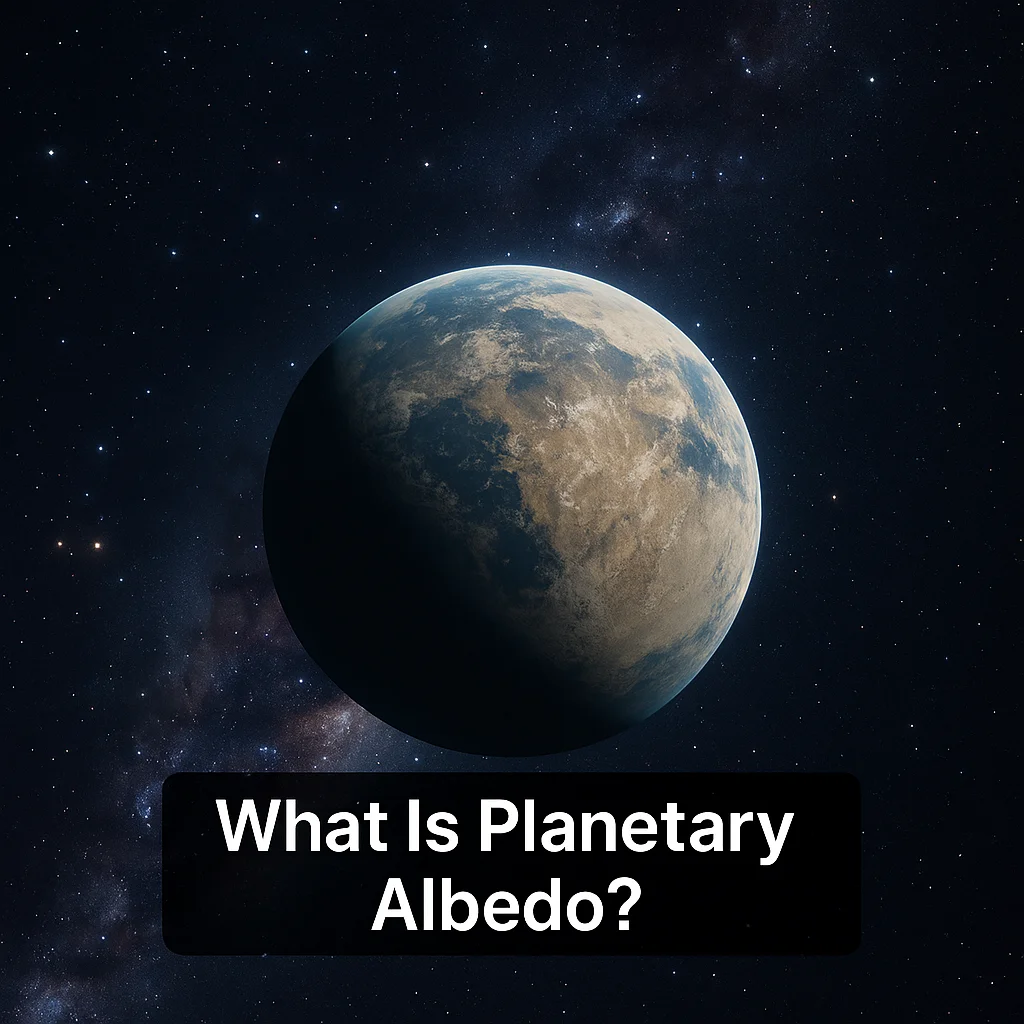
Albedo plays an important role in understanding the energy balance of planets. It helps scientists determine how much of the Sun's energy is absorbed versus reflected, which influences a planet's climate and temperature dynamics. By comparing albedo across different planets, researchers can gain insights into their atmospheric conditions and surface compositions.
In this article, we will explore what planetary albedo is, how it's measured, and why it matters. We will also examine its implications for climate and weather on different types of planets in the Solar System.
📍 Where It Is and How Far Away
Planetary albedo is a characteristic of each planet and can be measured from Earth or by spacecraft visiting the planets. In our Solar System, planets are spread across a vast distance from the Sun. To help visualize these distances, astronomers often use the Astronomical Unit (AU), where 1 AU is the average distance from Earth to the Sun, approximately 93 million miles.
The position of a planet in the Solar System affects how much sunlight it receives. For instance, the inner planets, like Mercury and Venus, receive more sunlight compared to the outer planets, such as Jupiter and Saturn. This influences their albedo and, consequently, their surface and atmospheric temperatures.
The measurement of albedo can give us clues about the planetary climate and surface conditions. For example, Earth has a moderate albedo, reflecting about 30% of sunlight, largely due to clouds, ice, and oceans.
🧱 Size, Mass, and Gravity (Made Simple)
Each planet has a unique size, mass, and gravitational pull, which affect its albedo in various ways. Smaller, rocky planets like Earth and Mars have solid surfaces with fixed features, impacting their reflectivity. In contrast, the gas giants like Jupiter do not have a solid surface, and their albedo is influenced more by their thick atmospheres.
A planet's mass and gravity play roles in determining its atmospheric composition and density. Higher gravity can hold an atmosphere more tightly, affecting the planet's temperature and how reflective its clouds are. Gas giants, being more massive, tend to have complex cloud systems with varying albedo values due to their thick, swirling storms.
🌡️ Atmosphere and Weather
The atmosphere of a planet significantly impacts its albedo. For example, Venus has a high albedo due to its thick, reflective cloud cover, which reflects about 75% of sunlight. In contrast, Mars has a much lower albedo, dominated by its reddish surface with less cloud cover.
Clouds, storms, and atmospheric composition all contribute to the planet's reflectivity. The presence of clouds usually increases a planet's albedo, while clear atmospheres often lead to lower albedo values. Weather patterns, driven by solar radiation and the planet's rotation, influence atmospheric dynamics and cloud formation.
Understanding the interplay of these factors provides insights into the weather and climate systems of the planets, helping researchers model potential climate changes and their effects.
🪨 Surface and Interior
The surface properties of a planet, such as its color and texture, directly affect its albedo. Rocky planets like Mercury and Mars have distinct surface features like craters and dust that determine how much sunlight they reflect. Jupiter and Saturn, without a true solid surface, have their albedo shaped by their cloud tops and atmospheric composition.
For terrestrial planets, albedo can vary due to geological activity, surface materials, and erosion. The interior of a planet affects its surface temperature and geological activity, indirectly influencing its albedo over time. Gas giants are characterized by layers of gases and liquids, with varying compositions, affecting their overall reflectivity.
🌀 Rotation, Orbit, and Seasons
A planet's rotation influences its day and night cycle, affecting how heat and light are distributed across its surface. Faster rotation can lead to more dynamic weather systems, potentially altering cloud cover and albedo.
The orbit of a planet, its distance from the Sun, and its axial tilt contribute to seasonal changes and climate. For instance, Earth has an axial tilt of about 23.5 degrees, leading to seasons that affect regional albedo changes as snow and ice cover fluctuate.
Planets like Uranus, which have extreme axial tilts, experience unusual seasonality that impacts their atmospheric and surface albedo throughout their long orbits around the Sun.
🧲 Magnetic Field and Radiation
A planetary magnetic field can influence its atmosphere and thus its albedo. Earth's magnetic field protects its atmosphere from solar wind, aiding in maintaining its climate system and related albedo factors.
The interaction of a magnetic field with solar radiation can cause phenomena like auroras, which, while not directly affecting albedo, are indicative of the protective roles these fields play in preserving atmospheres that contribute to a planet's reflectivity.
Radiation belts and magnetospheres moderate the planet's exposure to solar and cosmic radiation, helping maintain atmospheric stability and indirectly impacting albedo.
🌙 Moons, Rings, and Neighbors
Many planets have moons or ring systems that contribute to or interact with their albedo. Jupiter with its four large Galilean moons, and Saturn with its spectacular rings, have complex systems that affect and are affected by their albedos.
Moons can shadow planets or reflect light, making research into their albedos interesting. Ring systems, largely composed of ice and rock, have their own albedo characteristics, influencing their planet's total reflectivity.
The gravitational interaction between a planet and its moons or rings can create dynamic changes, affecting albedo over time, like the resurfacing of moons or ring particle redistribution.
🔭 How We Know (Missions and Observations)
Discovering planetary albedo involves telescopic measurements and data from spacecraft. Observatories on Earth and in space, such as the Hubble Space Telescope, measure reflected light from planets, providing data on their albedo and atmospheric conditions.
Spacecraft missions, like those from NASA or ESA, provide close-up observations and direct measurements of albedo by analyzing sunlight reflection on or around planets. These missions include instruments capable of measuring temperature, composition, and light spectra, all crucial for understanding albedo.
Pioneering missions to planets, like Galileo to Jupiter and the Cassini probe to Saturn, have given us a deeper understanding of planetary albedo and what it reveals about each world.
❓ Common Questions and Misconceptions
Is albedo the same for all planets? No, each planet has a unique albedo based on its surface and atmospheric characteristics.
Does high albedo mean a planet is cold? Not necessarily. While higher albedo reflects more sunlight, other factors like atmosphere and distance from the Sun also play significant roles in determining temperature.
Can we see albedo changes over time? Yes, changes in albedo can occur due to seasonal changes or geological activity. These are sometimes observable over years or decades.
Is albedo important for habitability? Albedo can affect a planet's climate and weather, which are factors in its potential habitability, but it is only one of many considerations.
Do moons have albedo? Yes, moons have albedo values that can affect their appearance and the illumination they provide to their parent planets.
Why does Earth have its current albedo? Earth's albedo is mainly due to our oceans, clouds, and ice, which reflect significant sunlight.
Does albedo affect climate change? Changes in Earth's albedo due to ice melt or cloud cover changes can influence climate, impacting energy balance.
Do gas giants have a surface to measure albedo? Gas giants don't have a solid surface, but their cloud tops have albedo that we can measure.
Are planetary rings included in albedo measurements? Yes, ring systems are part of the overall albedo calculations for a planet when applicable.
📌 Summary
- Planetary albedo measures how much sunlight a planet reflects.
- Albedo is a key factor in understanding a planet's climate.
- Size, mass, and gravity affect a planet's atmosphere and albedo.
- Atmospheric composition heavily influences reflectivity.
- The surface features and interior structure contribute to albedo.
- Rotation and orbit determine temperature distribution and seasons.
- Magnetic fields protect atmospheres and impact climate stability.
- Moons and rings can affect and reflect a planet's albedo.
- Observations from space missions provide detailed albedo data.
- Earth's albedo plays a crucial role in its climate system.